
2026-07-15 • BY D.T. Risenburg
The History of Detective Work: Famous Sleuths and How They Inspired Dukey
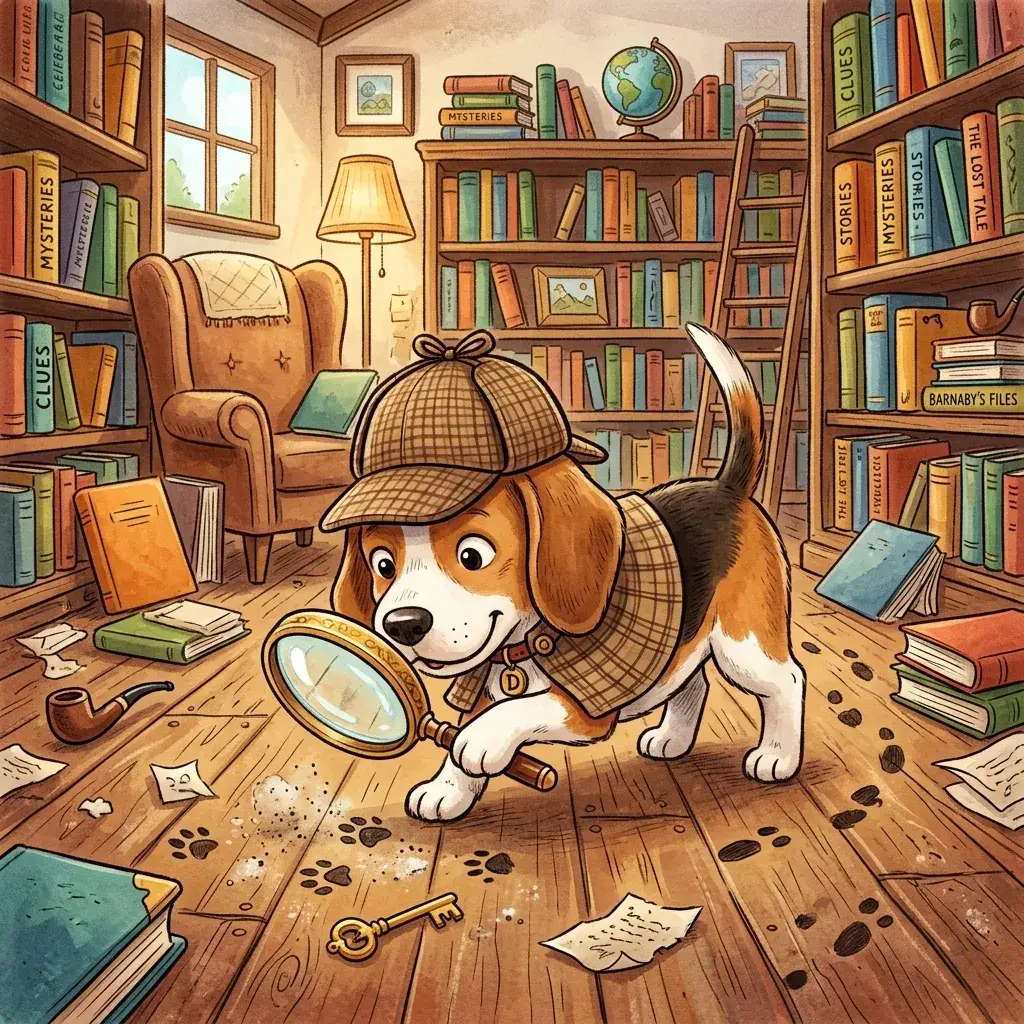
The figure of the detective has captivated readers for nearly two centuries. From Edgar Allan Poe's C. Auguste Dupin to Arthur Conan Doyle's Sherlock Holmes, the detective represents the triumph of intellect, observation, and logical deduction over chaos. For children, engaging with the detective genre is more than entertainment; it is an active exercise in cognitive development, building critical thinking skills that form the foundation of scientific inquiry.
A Brief History of the Detective Genre
The birth of the modern detective coincides with the rise of urban centers and scientific advancements in the 19th century. In real life, pioneering organizations like France's Sûreté (founded by Eugène François Vidocq in 1812) and the Pinkerton National Detective Agency in the United States established the first systematic methods of investigation, including ballistics, plaster casts of footprints, and criminal profiling.
Literature quickly followed. Edgar Allan Poe's 1841 story, The Murders in the Rue Morgue, introduced the concept of "ratiocination"—the process of logical reasoning. Decades later, Arthur Conan Doyle popularized this method globally through Sherlock Holmes, whose trademark deerstalker cap, magnifying glass, and clinical detachment inspired the visual and thematic identity of fictional sleuths for generations—including our analytical beagle, Dukey.
How Fictional Detectives Teach Deductive Reasoning
In the *Dukey and Dudley* series, Dukey represents the archetype of the classical rational detective. Unlike his partner Dudley, who relies on raw instinct and a powerful sense of smell, Dukey approaches mysteries through observation and the collection of physical clues. This dynamic mirrors the two fundamental methods of learning:
- Deductive Reasoning: Starting with a general rule or theory and applying it to specific observations (e.g., "The culprit left muddy tracks; the only mud today is near the swamp; therefore, the culprit came from the swamp").
- Inductive Reasoning: Making broad generalizations from specific observations (e.g., "Dudley found three acorns near the river; squirrels store acorns in hollow logs; therefore, a squirrel nest must be nearby").
Cognitive Benefits of Mystery Stories for Young Minds
Reading mysteries actively engages a child's brain in several critical ways:
- Active Reading: Rather than passively consuming a story, children reading a mystery become active participants, looking for clues in illustrations and trying to solve the puzzle before the final page.
- Pattern Recognition: Spotting recurring symbols, behaviors, or anomalies teaches children to organize information systematically and recognize discrepancies.
- Hypothesis Testing: As the plot twists, children formulate theories, test them against new evidence, and learn the value of changing their minds when their initial assumptions are proven wrong.
By introducing children to detectives like Dukey, we aren't just sharing a story—we are welcoming them into a rich legacy of puzzle-solving, encouraging them to view the world with curiosity, attention to detail, and a commitment to logical truth.
Explore More Woodland Adventures!
Join Dukey & Dudley on their quest, test your skills in the games room, or print mystery activity packs!