
2026-05-30 • BY D.T. Risenburg
Why Kids Need to Know That Different Strengths Make the Best Teams
As parents and educators, we often watch our children navigate the playground, the classroom, or the sports field and notice exactly where they shine. Maybe your child is the one organizing the game, figuring out the rules, and making sure everyone knows where to stand. Or maybe they are the one jumping right into the action without hesitation, full of energy and ready to go.
We spend a lot of time telling kids that they can be anything they want to be. It's a wonderful sentiment, but sometimes we forget to tell them something just as important: you don't have to be good at everything. In fact, relying on other people who are good at different things is how the best work gets done. Learning to lean on others isn't a weakness; it's the very foundation of collaborative teamwork.
The Brains and The Nose: Divergent Strengths in Literature
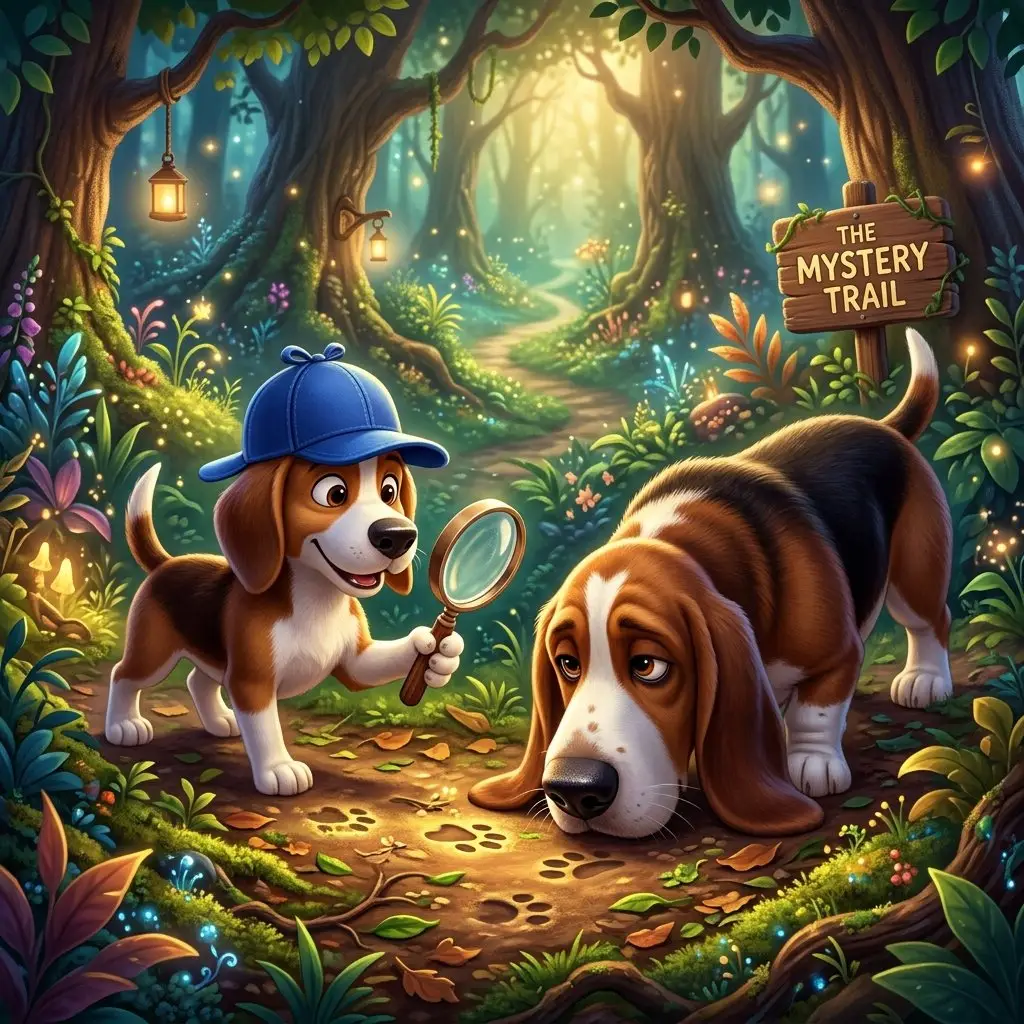
In The Great Acorn Heist, this idea of divided labor and collaborative intelligence sits right at the core of the narrative. Take our two main heroes, Dukey and Dudley. They are best friends, but they couldn't be more different if they tried. They don't look alike, they don't act alike, and they certainly don't solve problems using the same neurological pathways.
Dukey the Beagle is the analyst. He's the brains of the operation. Wearing his homemade detective hat, Dukey's mind goes to work the second a mystery arises in Oak Bark Park. He looks for physical clues, sketches out maps, keeps a journal, and tries to piece the puzzle together using logical deduction. He is methodical, structured, and deliberate.
Dudley the Basset Hound, on the other hand, operates entirely on raw sensory instinct. He has the absolute best tracking nose in the forest. While Dukey is busy overthinking footprints and calculating path trajectories, Dudley is already on the move, his nose glued to the damp soil, following a scent trail that nobody else even knew existed.
Why True Synergy Requires Mutual Dependence
If Dukey tried to solve the mystery of the missing acorns on his own, he would likely get stuck in a loop of analysis paralysis—staring at a magnifying glass without knowing where the physical trail leads. Conversely, if Dudley tried to solve the heist alone, he might blindly chase a scent trail straight into a trap set by Ratticus, without stopping to calculate the consequences.
But together? They are unstoppable. Dukey provides the strategy, and Dudley provides the execution. They don't try to change each other. Dukey never tells Dudley to stop sniffing and start diagramming, and Dudley never tells Dukey to drop his notebooks. They respect each other's domain expertise and step aside to let the other take the lead when their specific skill set is required.
How Cooperative Literature Translates to Childhood Development
When children read about Dukey and Dudley, they see a perfect, highly relatable model of what true cooperation looks like. Early childhood education often teaches "teamwork" as simply sharing toys or taking turns in a line. While these are important social milestones, mature teamwork is about recognizing that your peer possesses a strength you lack, and having the humility and trust to let them run with it.
This type of modeling teaches kids to look at their classroom peers with a constructive lens: *"I am really good at writing the story, and Sarah is incredible at drawing characters. Together, we can make an amazing comic book."* It reframes group work from a competitive chore where one child does all the work, to an puzzle where everyone contributes a unique shape.
Crucially, the story does not force Dukey to study tracking, nor does it force Dudley to learn deductive cartography. It celebrates them exactly as they are. When children realize that their unique, specialized strengths are valuable, it removes the pressure to conform to a single standard of "smart." They learn self-acceptance while simultaneously developing a deep appreciation for the diverse talents of those around them.
Frequently Asked Questions
How do you explain teamwork to a young child?
Explain teamwork by using the analogy of a puzzle: each person holds a different piece, and you can only see the beautiful final picture when everyone puts their pieces together. Storybooks featuring characters with different skills, like Dukey and Dudley, are excellent tools.
Why is division of labor important in children's group activities?
Dividing tasks based on children's natural strengths (e.g., organizer, artist, speaker) increases engagement, builds self-confidence, and teaches children that different skill sets are equally necessary to achieve a common goal.
What developmental skills are built through collaborative play?
Collaborative play builds critical emotional intelligence (EQ), including active listening, empathy, boundary negotiation, conflict resolution, and the capacity to appreciate diverse perspectives and abilities.
Explore More Woodland Adventures!
Join Dukey & Dudley on their quest, test your skills in the games room, or print mystery activity packs!